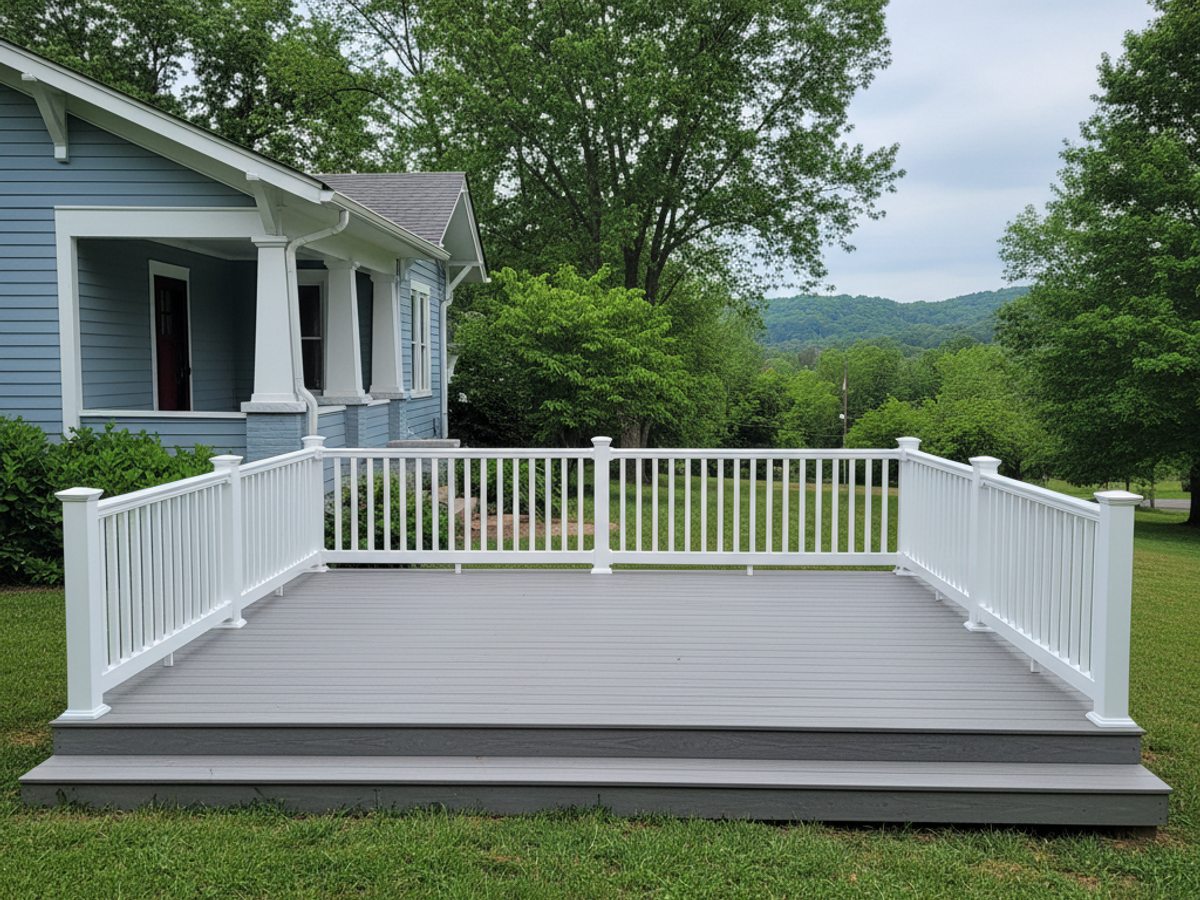
Bartlett has a lot of decks going up right now, and a lot of decks getting torn off and rebuilt because the first one was done wrong. Choosing who does the work matters more than which decking material you pick. A pressure-treated pine deck built correctly will outlast a composite deck built on bad footings. Here's what actually separates a builder worth hiring from one you should walk away from.
Licensed, insured, and what that actually protects
Ask for proof of general liability insurance and workers' comp, not just a license number. If a worker falls off a second-story deck frame on your property and the company has no workers' comp, you can end up named in the claim. A legitimate outfit hands you a certificate of insurance without hesitation. Someone who gets vague or changes the subject is telling you something.
Ask, too, whether they pull their own permits or expect you to. A builder who wants you to pull the permit under your own name is usually trying to dodge inspection accountability. That should be their job, not yours.
How permits and inspections actually work here
The City of Bartlett requires a permit for most attached decks, and for detached structures over a certain size. Expect at least two inspections on a typical job: one after the footings are dug and the posts are set, before any decking goes down, and a final inspection once the railing and stairs are in. Footings in Shelby County generally need to go about 12 inches down to get below the frost line and onto stable soil, not just poured on the surface. If your builder isn't planning for an inspector to see the footing holes before concrete goes in, that's a problem, because the inspector needs to see them open.
If you're in one of Bartlett's established subdivisions, like the neighborhoods off Stage Road or around Rolling Hills, check your HOA covenants before you sign a contract. A lot of those associations require architectural approval for anything visible from the street or the back property line, including deck height and railing style. A builder who's worked in Bartlett a while usually knows which subdivisions are strict about this and which aren't. That local knowledge saves you a stop-work order in week two.
What the ground here does to a deck
Shelby County soil is mostly loess, a fine wind-deposited silt, sitting over clay. On its own that silt is soft and can shift when it gets saturated. The clay underneath swells when it's wet and shrinks hard when it dries out in August, and that movement is exactly what cracks a poured footing that wasn't set deep enough or wide enough. A footing that sits above the frost-clay boundary will heave a little every winter and settle a little every summer, and over five or six years that shows up as a deck that's slightly out of level or a post that's started to lean.
Drainage matters just as much as depth. A lot of Bartlett lots were graded decades ago and slope toward the house instead of away from it, especially in the older sections built up through the 1970s and 80s near the original town center. Any deck builder worth hiring will look at where your yard actually drains before they dig, not just where the plans say the deck goes. If water pools under the deck after a heavy spring storm, that's where posts rot first, well before the boards on top show any wear.
What the weather does to the schedule and the finish
West Tennessee summers run hot and humid from June through August, and that heat affects more than comfort. Stain and sealant need the wood to be dry and the temperature in a specific range, usually not applied in direct afternoon sun above 90 degrees, or it skins over on top before it soaks in. A builder rushing a stain job in July heat to hit a deadline is setting you up to redo it in two years instead of five.
Spring is the wet season here, with frequent thunderstorms from March through May, and that's when concrete cure times matter most. Footing concrete needs a few days of cure before it's loaded, longer if rain keeps soaking the ground around it. Winter freezes are less frequent than up north, but Bartlett still gets a handful of nights below freezing most years, sometimes an ice event in January or February. Concrete poured right before a hard freeze without proper curing can lose strength it never gets back.
Red flags worth walking away from
- A quote with no mention of footing depth, post spacing, or joist size. If it just says "build deck," you don't know what you're buying.
- A price that's dramatically lower than three other quotes for the same square footage. Someone is cutting lumber grade, footing count, or hardware, and you won't know which until it fails.
- Ledger boards attached with lag screws into siding with no flashing behind them. This is one of the most common reasons older decks in Bartlett rot at the house connection and eventually pull away.
- No written contract, or a contract with no start and completion date.
- Reluctance to tell you who's actually doing the work, their own crew or a subcontractor they found for this job.
None of this means every low bid is a scam or every big company is automatically right. It means you ask specific questions and you expect specific answers. If your builder can tell you why they're setting footings at 12 inches instead of 8, or why the ledger flashing matters more than the railing style, you're talking to someone who's actually done this work before.
If you're weighing a new build, a repair on an older deck, or a full rebuild, our deck builder work around Bartlett covers all of it, and we're glad to walk your yard and tell you straight what it needs before you spend a dollar.